


Citizenship by Descent: How to Claim Citizenship Through Your Family

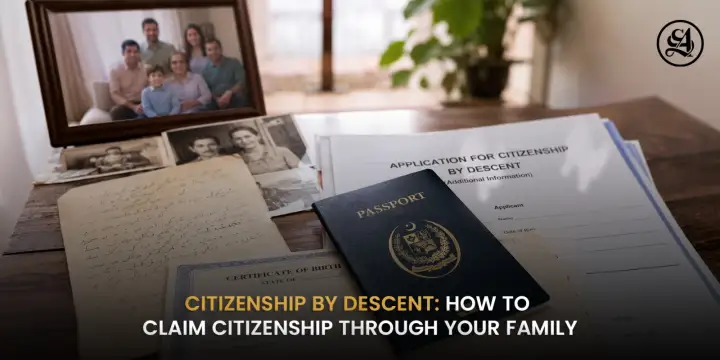
Citizenship can be available through many ways. You may also secure citizenship through your family’s history rather than where you live and to which country you belong. Individuals who have parents or grandparents from another country can secure citizenship by ancestry. It provides them a legal route to secure citizenship through a family connection.
What is Citizenship by Descent?
Citizenship by descent means securing citizenship or adopting nationality of another country because of a qualifying parent or an ancestor. Some individuals secure citizenship automatically at birth, while others are required to register or submit a formal application for acquiring citizenship. However, the rules depend on the nationality law which differs for each country.
Who Can Qualify for Citizenship by Descent?
The eligibility criteria differs for each country. Some countries mainly allow citizenship through parents, while others allow citizenship through grandparents or earlier generations.
The nationality or immigration authorities may examine whether the ancestor of the citizenship applicant was a citizen, whether the citizenship was lost before the next generation was born, and whether the births were properly registered.
German Citizenship by Descent
As per the principle of jus sanguinis (citizenship by blood) the German citizenship can be acquired at birth if at least one parent of the applicant is a German citizen at the time of birth. Moreover, citizenship was legally passed down to you without skipping generations.
Portuguese Citizenship by Descent
Portugal updated its nationality and general naturalization law in 2026. The country allows qualifying individuals who have family ties with a Portuguese citizen to secure nationality under the principle of jus sanguinis (right of blood). Hence, the applicants with parents or grandparents can secure citizenship.
Latvian Citizenship by Descent
Latvia offers citizenship routes for certain descendents of Latvian citizens. The descendents connected to the Latvian citizens who held citizenship before the Soviet occupation (1940) can acquire Latvian citizenship.
Citizenship Through Parents
One of the most common routes for applicants is citizenship through parents. The condition is that when the child was born the parents were holding that country’s citizenship. However other factors such as registration requirements, birth dates, and nationality laws can affect whether citizenship was automatically passed down.
Citizenship Through Grandparents
Some countries allow citizenship through grandparents but the process is usually more detailed. It requires applicants to show proof of their unbroken connection with family. The proof may include civil records or other documents.
What Documents Do You Need?
The documents you need commonly include birth and marriage certificates, passports, citizenship records, and proof of name changes. Foreign documents may also include some additional records.
Common Problems With Citizenship by Descent Applications
Common issues include missing birth certificates, inconsistent data such as different spelling of names, citizenship being lost before the next generation was born, and difficulty in proving family line. Changes in nationality law can also affect the application.
When Should You Hire a Citizenship Lawyer?
A citizenship immigration lawyer can help applicants in reviewing their application, guide them through the process, and help them understand the nationality laws. If your case is complicated, consulting a lawyer can help you a lot. A citizenship interview lawyer may also help you prepare for the questions that may arise during the interview.
Conclusion
Citizenship by descent provides a useful route to individuals who have qualifying family connections. However, the eligibility depends on the laws of the country and the history of each generation. Qualified immigration lawyers at Saad Ahsan Residency and citizenship can help investors and families throughout the application process as per an individual’s conditions.
 Hamaad Kaleem

 Saad Ahsan

 Sidra Malik